
A nonprofit evaluation case study on when and why to partner with an external evaluator
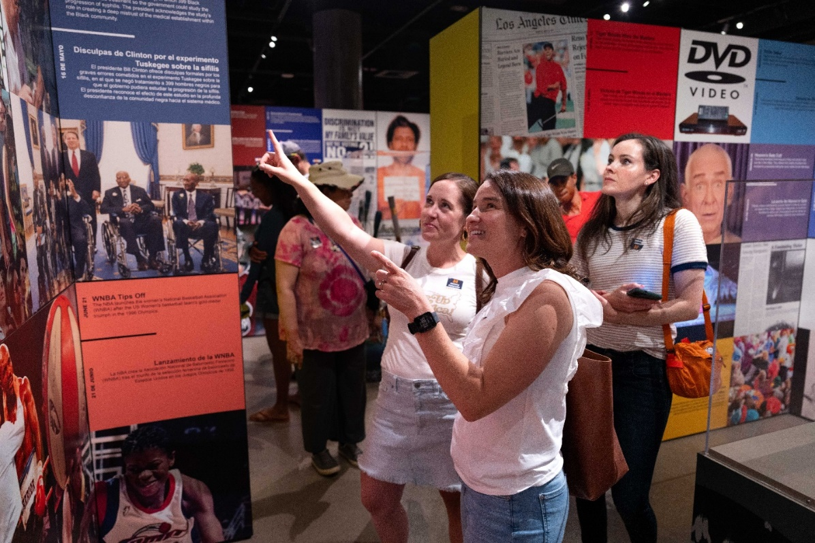
For many nonprofits and purpose-driven organizations, evaluation is not a question of whether it matters, but how to do it well with limited time, staff capacity, and competing priorities. That tension was front and center for History Colorado as they prepared to launch an annual membership survey to learn from their community, improve programs, and strengthen engagement. As an organization committed to preserving and sharing Colorado’s stories while being a place of belonging for all, History Colorado (HC) recognized the importance of gathering meaningful member feedback without overextending staff or resources.
This case study highlights how HC partnered with Research Evaluation Consulting LLC (REC), an external evaluator for nonprofits and other organizations, to develop a focused, high-quality approach that prioritized learning, feasibility, and available resources. To explore the impact of this partnership from History Colorado’s perspective, we interviewed Shanea Ewig, Director of Membership.
Starting with Trust and Context
History Colorado’s decision to work with REC was informed by previous collaborations and a shared understanding of the organization’s goals and values. As this was REC’s fourth project with HC in recent years, the team moved quickly into key conversations about the data they needed, why it mattered, and how it would be used. As Shanea shared, “We’ve used you all in the past and liked the work you did. We liked that you are a Colorado company that already knew our institution.” This foundation made it easier to design an evaluation approach aligned with institutional goals while also grounded in day-to-day realities.
Working with an External Evaluator to Scale the Scope Without Losing Impact
Early in the planning process, History Colorado recognized that the original evaluation scope exceeded their available budget, as other initiatives and organizational priorities competed for funding. Instead of giving up or moving forward with an unrealistic plan, History Colorado and REC worked together to thoughtfully adjust the project’s scope. They pinpointed which evaluation tasks could be managed by their own team and where bringing in outside expertise would deliver the most benefit. Because History Colorado already had strong systems in place for member communication and survey distribution, those functions remained in-house. REC’s role was intentionally focused on survey design, methodology, and analysis – areas where specialized evaluation expertise could strengthen rigor and efficiency.
As Shanea explained, “The parts of the project I knew I’d need help on were always the building and evaluation of the survey. So, it was great that your team could take that on for us, and I took on getting it out to people to take it.”
Building Evaluation Capacity with External Evaluator Support
REC’s guidance went beyond technical execution. Through collaborative survey design conversations, History Colorado gained insight into best practices for survey construction, including question wording, sequencing, and length. This process helped narrow a long list of potential questions into a focused set of priorities, resulting in a survey that was easier for members to complete and more useful for staff.
When asked how REC’s involvement strengthened the work in ways that would have been difficult to achieve internally, Shanea shared, “The thoughtful process of building a survey and the science behind how a person will navigate the survey so that we get the best answers was really helpful!” Equally important, the partnership reduced the burden on History Colorado staff. Rather than carrying the evaluation alone, the team felt supported and more confident in the quality of the final product. As Shanea noted, “I felt supported through this whole process and like I wasn’t doing this by myself… By doing this work, you help[ed] build my capacity to do other parts of my job!”
Benefits of a More Focused Evaluation Approach
At the time of the interview, the evaluation project with REC was still underway. Based on their experience to date, History Colorado anticipates several benefits that extend beyond the survey itself. The process has already begun to deepen internal understanding of evaluation and to spark colleagues’ interest in how data can be used more intentionally across the organization. Working with an external evaluator also provided opportunities for staff to strengthen their understanding of evaluation practices while maintaining their existing responsibilities.
Looking ahead, the team sees opportunities to use survey findings as a learning tool, including sharing results through an all-staff session to support reflection, alignment, and continuous improvement. This will position evaluation not simply as a reporting requirement for History Colorado, but as a resource for organizational learning and decision-making. Reflecting on the process, Shanea shared, “Talking through the science of survey building was super interesting, and I left feeling a bit smarter about how evaluation works and the benefits of it. You helped me narrow down what I could realistically find out from the survey and figure out my priorities…”

Lessons for Organizations Navigating Evaluation with Limited Capacity
History Colorado identified several lessons that will resonate with other nonprofits and mission-driven organizations navigating evaluation with limited staff time and resources:
- Start with clear priorities rather than trying to measure everything
- Develop a list of potential outcomes of interest to help guide evaluation decisions
- Be honest about internal capacity and areas of expertise
- Ask questions and lean into evaluation partnerships
- Treat evaluation as a tool for learning and improvement – not just reporting
Finally, working with a trusted partner emerged as a vital takeaway for History Colorado. Speaking about the value of partnering with REC, Shanea noted, “If you are looking for capacity building, then use Annette and her team! The work it takes into building a survey, then evaluating it afterwards, and making sure you share it out to the right stakeholders takes so much time! By having REC do this part of the work… I could focus on the parts of my job that I am good at and make revenue for my institution.”
The Value of an External Evaluator for Nonprofits and Organizations
For leaders navigating uncertainty or competing priorities, History Colorado emphasized that seeking high-quality evaluation support remains critical, even when resources are limited. In this context, evaluation is not an added burden but a practical tool for learning and improvement. By intentionally gathering feedback, organizations can identify small, actionable changes such as clearer communication, stronger expectation-setting, or targeted technical improvements that meaningfully enhance members’ experiences. History Colorado also underscored the importance of using credible data to guide decisions, rather than relying on assumptions.
Partnering with an external evaluator for nonprofits and other organizations can help clarify priorities, identify areas of greatest need, and apply expertise where it matters most. For this organization, survey design support and evaluation helped ensure stronger results while remaining within budget. Equally important, external evaluation support helped ease staff workloads. By outsourcing the most technical components of the work, internal staff were able to focus on mission-critical and revenue-generating responsibilities, while still benefiting from high-quality data to enhance programs, improve the member experience, and support long-term sustainability.
Evaluation was not a tradeoff, but an investment in organizational learning and effectiveness. As Shanea shared, “Using REC helped with my workload capacity. If evaluation is something you are already doing, or want to do, having experts help will not only mean you get a better end result, but your staff can focus on the parts of their job that help bring revenue to their institutions, and then use the data they learn to improve and hopefully bring even more revenue in!”
Looking to strengthen your evaluation approach without overwhelming your team?
REC partners with nonprofits, public agencies, and mission-driven organizations to design right-sized evaluation strategies that support learning, decision-making, and long-term impact, aligned with real-world capacity and priorities. Contact us to schedule a consultation and gain clarity through a thorough evaluation.
Related Posts
5 Tips for Creating a Survey
6 Benefits of Evaluation
Let Data Drive Your Decisions
Leveraging Research and Evaluation to Stay Ahead: Why Data-Driven Leadership Wins
When to Hire an External Evaluator – A Checklist!